The morning sun cast long shadows across the Serengeti when our Land Rover rounded the acacia grove, and there she was—a magnificent lioness, no more than thirty feet away, lazily grooming her cubs. My heart hammered against my ribs, and every instinct screamed at me to grab my camera and lean out for the perfect shot. Thank God for our guide, Samuel, who immediately grabbed my arm and whispered the words that probably saved my life: “Sir, please. Stay seated. Stay quiet.”
That moment in Tanzania taught me something profound about wildlife encounters: the difference between awe and catastrophe often comes down to a single decision made in seconds. After fifteen years of travel writing and countless expeditions across six continents—from tracking mountain gorillas in Rwanda to swimming with whale sharks in the Philippines—I’ve witnessed both the sublime beauty of respectful wildlife observation and the devastating consequences of human stupidity in the wild.
The statistics paint a sobering picture. According to the National Park Service, wildlife-related injuries in U.S. national parks alone result in dozens of hospitalizations annually, with bison attacks accounting for more injuries than any other animal. Globally, the numbers are staggering: wildlife conflicts cause thousands of human deaths each year, many of which could have been prevented with proper knowledge and restraint.
But here’s what the statistics don’t capture—the magic that unfolds when you approach wildlife with respect, patience, and humility. The way a family of elephants will acknowledge your presence with a gentle rumble before continuing their evening drink. The breathtaking moment when a humpback whale surfaces beside your boat, close enough to see the barnacles on her ancient skin, yet choosing to share that space with you.
The key lies in understanding what not to do.
Here are ten critical mistakes that can transform a dream encounter into a nightmare—learned through hard experience, scientific research, and occasionally, sheer dumb luck.
1. Never Feed Wild Animals (Yes, That Includes That “Cute” Monkey)

Picture this: you’re enjoying a sunset dinner at a beachside restaurant in Bali when an adorable long-tailed macaque approaches your table with those big, pleading eyes. Every fiber of your being wants to toss him a french fry. Don’t.
Feeding wild animals ranks as the single most dangerous mistake travelers make, and I learned this lesson the hard way in Costa Rica. While photographing white-faced capuchin monkeys in Manuel Antonio National Park, I watched a tourist offer a banana to what appeared to be a friendly monkey. Within seconds, the entire troop descended like a furry hurricane, snatching everything from her backpack to her husband’s glasses. One monkey even grabbed her camera and sprinted up a tree—a $3,000 lesson in why park rules exist.
The science behind this prohibition is crystal clear. When animals associate humans with food, they lose their natural fear and become increasingly aggressive. Yellowstone National Park reports that fed animals cause 90% of all wildlife incidents in the park. Bears that receive human food become “food-conditioned” and often must be euthanized—a tragedy summed up by the park service motto: “A fed bear is a dead bear.”
Beyond the immediate danger, feeding wildlife disrupts their natural foraging behaviors, creates nutritional deficiencies, and can spread diseases. That innocent banana you’re offering could contain pathogens that devastate local populations. In some cases, well-meaning tourists have inadvertently introduced invasive species through contaminated food.
The temptation is real—I get it. But resist. The photograph of that howler monkey naturally swinging through the canopy will always be more meaningful than a staged shot of him eating your granola bar.
2. Don’t Get Too Close for That Instagram Shot
Social media has turned wildlife photography into a contact sport, and the results are predictably catastrophic. Every summer, Yellowstone rangers deal with tourists who approach bison for selfies, apparently forgetting that these animals weigh 2,000 pounds and can run 35 miles per hour. The park recommends staying at least 25 yards from bison and 100 yards from bears and wolves—distances that seem laughably conservative until you’ve seen a bison charge.
During a recent assignment in Kenya’s Maasai Mara, I watched a photographer creep within ten feet of a cheetah for what he called “the shot of a lifetime.” The big cat’s reaction was immediate and terrifying—ears flattened, pupils dilated, muscles coiled for attack. Only the quick thinking of our guide, who started the engine and slowly backed away, prevented disaster.
Professional wildlife photographers understand that telephoto lenses exist for good reason. The most stunning wildlife images are often taken from considerable distances using proper equipment. Ansel Adams famously said he never got closer than 200 yards to a grizzly bear, yet his photographs remain among the most powerful wildlife images ever captured.
Consider investing in quality binoculars and a decent telephoto lens before your trip. Your Instagram followers will be far more impressed by a sharp, well-composed shot taken from a safe distance than a blurry close-up that endangered both you and the animal.
3. Never Run from Predators (Unless It’s a Crocodile)
The urge to flee when confronted by a large predator is hardwired into our DNA, but it’s often the worst possible response. Running triggers the chase instinct in most carnivores, transforming you from a potential non-threat into prey.
During a walking safari in Zambia, our group encountered a leopard on the trail ahead. Every instinct screamed “run,” but our guide’s calm voice cut through the panic: “Stand still. Look big. Back away slowly.” The leopard studied us for what felt like hours (probably thirty seconds) before melting into the bush with that liquid grace that makes leopards seem like living shadows.
Bears present particular challenges because different species require different responses. For black bears, making yourself appear large and backing away slowly usually works. Grizzly bears are more unpredictable—playing dead might be your best option if attacked, though prevention through proper food storage and noise-making remains the primary strategy.
The crocodile exception exists because these ancient predators operate on pure ambush instinct. If you’re within striking distance of a crocodile (roughly three times their body length), running in a straight line away from water gives you the best chance of survival. The old advice about running in zigzags is a myth—crocodiles are surprisingly fast on land but only for short distances.
4. Don’t Make Loud Noises or Sudden Movements
Wildlife observation requires the patience of a monk and the self-control of a saint. Sudden movements and loud noises can trigger defensive behaviors in even the most docile-seeming animals.
I learned this lesson while whale watching off the coast of Iceland. A massive blue whale surfaced near our boat, and the collective gasp from passengers was followed by cameras clicking like machine guns and excited shouting. The whale immediately dove, and we didn’t see another one for the rest of the trip.
Marine biologists have documented how noise pollution affects whale behavior, causing them to alter migration routes and feeding patterns. The same principle applies on land—research shows that elephants can detect seismic vibrations from human activity miles away and will actively avoid noisy areas.
Professional wildlife guides move like ghosts through the forest, speaking in whispers and teaching clients to do the same. The reward for patience is profound: animals that might flee from loud tourists will often ignore or even approach quiet, respectful observers.
Practice the “slow and steady” approach. Move deliberately, speak quietly, and resist the urge to point or gesture suddenly when you spot an animal. Your patience will be rewarded with longer, more meaningful encounters.
5. Never Touch Marine Life
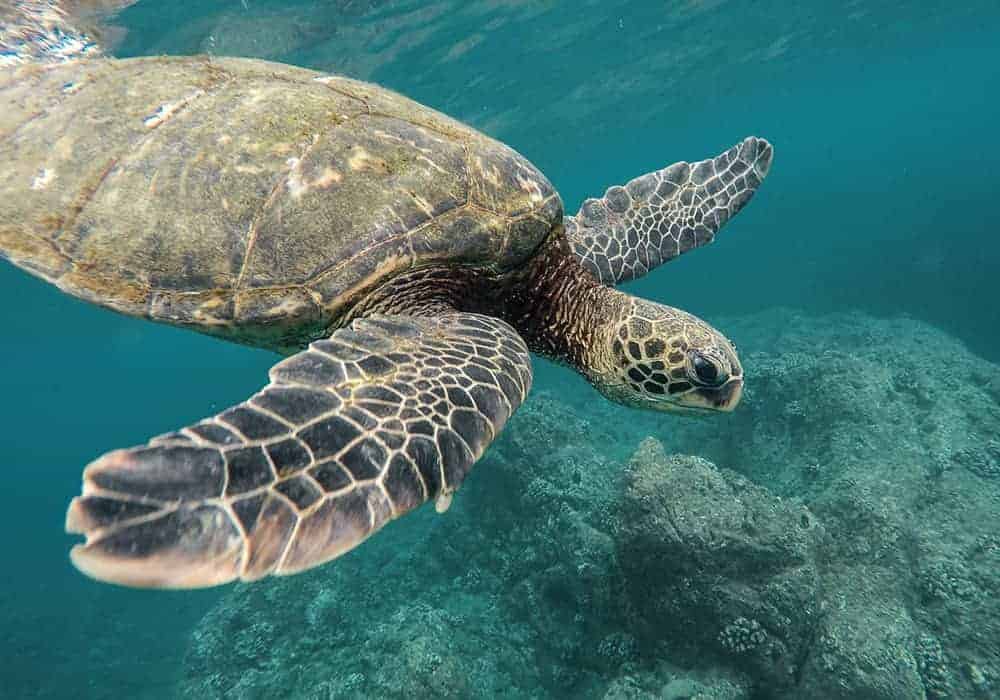 If you’re lucky, you might spot sea turtles when snorkeling
The underwater world presents unique temptations and dangers that even experienced travelers underestimate. During a diving expedition in the Red Sea, I watched a tourist grab a sea turtle for a photo opportunity. The turtle’s panicked thrashing damaged both its shell and the coral reef it crashed into while escaping—a perfect example of how a single thoughtless act can cause cascading environmental damage.
Marine animals carry bacteria and toxins that human skin isn’t equipped to handle. That beautiful sea anemone or coral formation might deliver a sting that ruins your vacation and requires medical attention. More importantly, human skin oils and sunscreen residue can be toxic to marine life, causing coral bleaching and disrupting the delicate symbiotic relationships that sustain reef ecosystems.
The crown-of-thorns starfish I encountered while snorkeling in Australia’s Great Barrier Reef looked like a fascinating alien creature until our guide explained that touching one delivers venomous spines that cause excruciating pain lasting for hours. Similarly, the seemingly harmless blue-ringed octopus carries enough venom to kill an adult human within minutes.
Responsible diving means maintaining neutral buoyancy, keeping your hands to yourself, and remembering that you’re a visitor in someone else’s home. The most rewarding underwater experiences come from patient observation, not physical interaction.
6. Don’t Use Flash Photography
Flash photography can cause permanent eye damage to nocturnal animals and trigger aggressive defensive behaviors in species that interpret sudden bright lights as threats. During a night safari in Borneo, I watched a photographer’s flash send a family of orangutans scrambling in panic, potentially separating mothers from their infants in the darkness.
Modern cameras perform remarkably well in low-light conditions, making flash photography largely unnecessary for wildlife shots. ISO settings above 3200 can capture stunning images in conditions that would have been impossible just a decade ago.
Nocturnal animals have evolved eyes that are extremely sensitive to light. The sudden burst from a flash can cause temporary blindness, leaving them vulnerable to predators or accidents. Research has shown that owls and bats can be disoriented by camera flashes for hours after exposure.
Professional wildlife photographers rely on natural light, careful positioning, and sometimes subtle fill lights positioned well away from the animals. The results are invariably more natural and compelling than harsh flash photography.
7. Never Leave Food or Scented Items Accessible
Food storage in wildlife areas isn’t just about protecting your snacks—it’s about preventing dangerous animal encounters and preserving natural behaviors. During a camping trip in Alaska’s Denali National Park, I met a camper whose entire food supply had been destroyed by a grizzly bear that also shredded his tent in the process. The bear had to be relocated, and the camper’s trip was over.
Bears possess an sense of smell seven times more powerful than a bloodhound. They can detect food odors from miles away and will investigate anything that smells remotely edible. This includes toothpaste, soap, deodorant, and even empty food containers that retain residual scents.
Proper bear canisters and food hanging techniques aren’t suggestions—they’re survival skills. National parks provide detailed instructions for food storage, and ignoring these guidelines puts both you and the animals at risk. Bears that repeatedly obtain human food often become aggressive and must be euthanized.
The principle extends beyond bears. Raccoons, monkeys, and various bird species can become problematic when they associate humans with easy meals. Pack everything in sealed, odor-proof containers and follow local regulations religiously.
8. Don’t Separate Animal Families or Block Escape Routes


Animal behavior during breeding seasons or when protecting young becomes exponentially more dangerous and unpredictable. Mother animals will attack creatures many times their size to protect their offspring, and getting between a parent and baby is essentially declaring war on a creature with nothing to lose.
During a safari in Botswana, I watched tourists in another vehicle inadvertently position themselves between a hippopotamus mother and her calf. The massive female emerged from the water like a biological torpedo, charging the vehicle with jaws that can snap a canoe in half. Only the driver’s quick reflexes prevented tragedy.
Hippos kill more people in Africa than any other large animal, largely because people underestimate their speed on land and territorial nature around water. Always position yourself so that animals have clear escape routes to their preferred habitat—water for hippos, trees for primates, open ground for most hoofed animals.
Migration corridors present particular challenges. During wildebeest migrations in the Serengeti, vehicles that block traditional river crossing points can cause panic stampedes that kill hundreds of animals. Research your destination’s animal movement patterns and coordinate with local guides who understand seasonal behaviors.
9. Never Attempt to “Rescue” Young Animals
The urge to help apparently abandoned young animals is one of the most common and devastating mistakes well-intentioned travelers make. That “lost” fawn or seal pup you’re tempted to rescue is almost certainly not abandoned—its mother is likely nearby, waiting for you to leave.
In Alaska, I encountered a tourist who had “rescued” a sea otter pup she found alone on the beach. Wildlife officials explained that sea otter mothers regularly leave their pups on shore while diving for food, sometimes for hours at a time. The pup she removed from the beach was now orphaned because its mother wouldn’t recognize its scent after human handling.
Wildlife rehabilitation centers report that 90% of “rescued” young animals were never actually in distress. Human intervention disrupts the natural learning process young animals need to develop survival skills. Even worse, human-raised wildlife often cannot be successfully released back into the wild.
Parent animals teach critical survival skills through carefully structured interactions. A bear cub that doesn’t learn proper foraging techniques from its mother will struggle to survive as an adult. Birds that don’t learn migration routes from their parents may never successfully navigate seasonal movements.
If you encounter young animals that appear to be in genuine distress, contact local wildlife authorities rather than intervening directly. They have the expertise and legal authority to make proper assessments and take appropriate action.
10. Don’t Ignore Local Guides and Regulations
The final and perhaps most important rule is also the most frequently violated: respect local expertise and regulations. Every wildlife area has specific rules developed through decades of research, incident reports, and hard-won experience.
In Rwanda’s Volcanoes National Park, mountain gorilla viewing requires strict adherence to distance requirements, group size limits, and time restrictions. These aren’t arbitrary bureaucratic rules—they protect both the critically endangered gorillas and the visitors who come to see them. Gorillas share 98% of human DNA, making them extremely susceptible to human diseases that could devastate the remaining population of fewer than 1,000 individuals.
Local guides possess generational knowledge about animal behavior, seasonal patterns, and environmental hazards that no guidebook can capture. During a tiger tracking expedition in India’s Ranthambore National Park, our guide identified signs of a recent kill from subtle clues I never would have noticed—broken branches at a specific height, disturbed leaf litter, and the particular way birds were calling in the distance.
Park regulations exist because someone learned the hard way that certain behaviors lead to injury or death. Speed limits in wildlife areas aren’t about traffic enforcement—they’re about preventing animal collisions that kill thousands of animals annually while often destroying vehicles and injuring passengers.
The arrogance of ignoring local expertise has cost lives and damaged ecosystems worldwide. Respect the rules, listen to the guides, and remember that you’re a visitor in these animals’ homes.
Conclusion

Standing in that Tanzanian sunrise, watching the lioness teach her cubs to hunt while maintaining respectful distance, I understood something fundamental about wildlife encounters: the most profound experiences come not from getting as close as possible, but from earning the privilege of being ignored by wild animals going about their daily lives.
The ten principles outlined here aren’t just safety guidelines—they’re a framework for ethical wildlife tourism that benefits both travelers and the animals we’re privileged to observe. When we follow these rules, we contribute to conservation efforts that protect threatened species and their habitats. When we ignore them, we become part of the problem threatening the very animals we claim to love.
Responsible wildlife viewing requires patience, humility, and the wisdom to recognize that we’re temporary visitors in environments where animals have lived for millennia. The most rewarding wildlife encounters happen when animals choose to share their space with us, not when we force our presence upon them.
The next time you find yourself face-to-face with wild animals—whether it’s a curious seal in the Galápagos, a family of gorillas in Uganda, or a massive elephant in Botswana—remember that your actions in those crucial moments will determine whether the encounter becomes a treasured memory or a cautionary tale.

Get it Now!
Going on Vacation Soon?
Subscribe to Download our 7-Point Vacation Checklist (PDF) for FREE!
This checklist saves you valuable time by preparing for any vacation, taking care of vacation finances, securing your home while traveling, dealing with work and family matters, and getting ready to embrace your trip. Subscribe and get instant access now!
By subscribing you agree to our terms and privacy policy
- 338shares
- Share on Facebook
- Share on Twitter
- Share
- Pin