New York City has a reputation for being one of the most expensive destinations in the world, but the truth is that some of the city’s most memorable experiences won’t cost you a single dollar.
After years of exploring every corner of this magnificent metropolis, I’ve discovered that the best things in life, and in Manhattan, Brooklyn, Queens, and beyond, really are free.
Elevated Parks and Green Spaces

The High Line transformed the way we think about urban parks when it opened in 2009. This elevated railway-turned-garden stretches 1.45 miles through Chelsea and the Meatpacking District, offering stunning views of the Hudson River and the city skyline. Walking through this green oasis feels like stepping into a carefully curated art installation, with native wildflowers, contemporary sculptures, and benches positioned perfectly for people-watching. Every season brings a different character to the park: spring bulbs, summer grasses, autumn colors, and winter’s stark architectural beauty.
I’ll admit that my first visit to the High Line was slightly embarrassing. I spent twenty minutes looking for an elevator before realizing I’d been standing directly next to the stairs. But once I made it up (taking the stairs like a proper New Yorker), the views made me forget my navigational failures entirely.
Central Park deserves multiple visits because its 843 acres contain countless hidden treasures. Bethesda Terrace and Fountain serve as the park’s architectural heart, while the Ramble offers 38 acres of winding paths perfect for getting deliberately lost. Belvedere Castle provides panoramic views from its terraces, and the Shakespeare Garden blooms with flowers mentioned in the Bard’s works. During summer, you can catch free performances at the Delacorte Theater through Shakespeare in the Park, though securing tickets requires dedication and patience.
Iconic Bridges and Architecture
Brooklyn Bridge remains one of the most iconic structures in the city, and crossing it on foot is absolutely essential. The pedestrian walkway sits above the traffic, giving you unobstructed views of Lower Manhattan, the Statue of Liberty, and Brooklyn. Early morning walks offer a quieter experience, while sunset transforms the granite towers into silhouettes against a painted sky. The bridge takes about 30 to 40 minutes to traverse, depending on how many times you stop for photographs, and you will stop.
Grand Central Terminal functions as more than just a transportation hub. It’s a Beaux-Arts masterpiece that deserves careful exploration. The main concourse ceiling depicts a Mediterranean sky with 2,500 stars, 60 of which are illuminated. The Whispering Gallery outside the Oyster Bar demonstrates fascinating acoustics: stand in opposite corners of the arched corridor, whisper into the wall, and your companion will hear you perfectly. Free tours run on Fridays, but wandering independently allows you to discover the Market, the Campbell apartment’s history, and the hidden staircases at your own pace.
Free Rides with Million-Dollar Views
The Staten Island Ferry offers the city’s best bargain: a 25-minute cruise with spectacular views of the Statue of Liberty, Ellis Island, and the Manhattan skyline, completely free. The orange vessels run 24 hours a day, departing every 30 minutes during peak times. Commuters barely glance up from their phones, but visitors crowd the outdoor decks with cameras ready. The return journey provides an entirely different perspective, with the Verrazano-Narrows Bridge framing Brooklyn’s shoreline.
Roosevelt Island offers an entirely different experience via the aerial tramway, which costs only a MetroCard swipe. The island itself provides quiet respite from Manhattan’s intensity, with waterfront promenades offering stunning views back toward the city. Four Freedoms Park at the southern tip honors FDR with a brutalist memorial designed by Louis Kahn. The ruins of the Smallpox Hospital create an unexpectedly romantic backdrop for contemplation.
On my first tram ride, I made the rookie mistake of attempting to take a panoramic photo while the car swayed over the East River. The result looked less like a stunning cityscape and more like abstract art created during an earthquake. I’ve since learned to just enjoy the view and leave the photography to steadier hands.
Cultural and Historical Landmarks
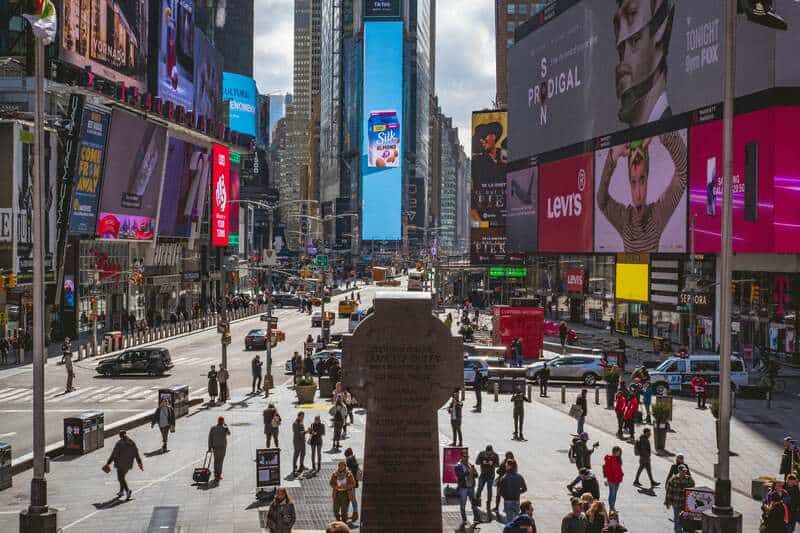
Times Square polarizes New Yorkers. Many avoid it religiously, but the spectacle deserves at least one visit. The intersection of Broadway and Seventh Avenue pulses with energy day and night, its digital billboards creating an almost hallucinogenic atmosphere after dark. Street performers, from acrobatic crews to costumed characters, provide free entertainment of varying quality. The red TKTS stairs offer an excellent vantage point for observing the chaos without being swept into it.
The New York Public Library’s Stephen A. Schwarzman Building stands majestically on Fifth Avenue, guarded by the marble lions Patience and Fortitude. The Rose Main Reading Room stretches 297 feet long, its ornate ceiling soaring 52 feet overhead, providing one of the city’s most beautiful spaces for contemplation. Free exhibitions rotate through Gottesman Hall, and the building itself contains architectural details worth hours of exploration. The Map Division, Periodicals Room, and beautiful staircases all tell stories of the city’s intellectual history.
St. Patrick’s Cathedral rises magnificently on Fifth Avenue, its neo-Gothic spires reaching toward heaven amid Midtown’s skyscrapers. The interior offers respite and awe in equal measure, with its stained glass windows, rose window, and Lady Chapel providing spaces for both worship and architectural appreciation. Whether or not you’re religiously inclined, the craftsmanship and scale command respect and wonder.
Memorial Sites and Reflection
The 9/11 Memorial provides a powerful space for reflection in Lower Manhattan. Twin reflecting pools occupy the footprints of the original towers, their names inscribed along bronze parapets. Water cascades down the sides and disappears into seemingly bottomless voids at the center, a design that evokes both loss and the possibility of renewal. The surrounding Memorial Plaza features 400 swamp white oak trees, creating a contemplative atmosphere amid the Financial District’s intensity.

Waterfront Parks and Neighborhoods
Brooklyn Bridge Park stretches 1.3 miles along the East River waterfront, offering multiple piers with distinct personalities. Pier 1 provides perfectly framed views of Manhattan’s skyline and the Brooklyn Bridge, while Pier 2 features sports facilities and a roller skating rink. The park’s design integrates sustainable practices, natural habitats, and recreational spaces seamlessly. Jane’s Carousel, housed in a Jean Nouvel-designed glass pavilion, charges a small fee, but the surrounding park delivers million-dollar views for free.
Chelsea Market occupies a former Nabisco factory where the Oreo cookie was invented, now transformed into a food hall and shopping destination. While the vendors sell their wares, wandering through the industrial-chic corridors and admiring the waterfall installation costs nothing. The exposed brick, vintage machinery, and creative use of space make it an architectural destination in itself. Connected to the High Line via stairs, it anchors the southern end of that elevated park.
Village Life and Island Escapes
Washington Square Park serves as the heart of Greenwich Village, centered around its iconic arch. The fountain attracts everyone from NYU students to street musicians to chess players who set up boards along the southwest corner. The park’s history spans from its days as a potter’s field to its role in countless films and photographs. Watching the daily parade of humanity here offers insight into the village’s artistic soul and bohemian legacy.
Governors Island opens seasonally, typically May through October, and ferries from Manhattan cost just a few dollars, with free service on weekend mornings. Once there, everything is free: sprawling lawns, art installations, bike paths, hammocks, and views of the Statue of Liberty. The Slide Mountain installation and Outlook Hill provide unique perspectives on the harbor. The island hosts festivals, art shows, and performances throughout its season, transforming a former military base into a creative playground.
Bottom Line
These free attractions prove that experiencing New York City’s essence doesn’t require emptying your wallet.
The city’s greatest gift might be its democracy of access. These spaces belong to everyone who walks through them, creating memories that no price tag could properly value.
- 79shares
- Share on Facebook
- Share on Twitter
- Share
- Pin